Wright Brothers
Solved the problem of controlled, powered flight and opened the age of aviation.
- Founders
- Orville Wright, Wilbur Wright
- Lifespan
- first powered flight 1903
- Country
- United States
- Industries
- Aerospace
The problem
By 1900 others could build engines and wings, but no one had solved how to keep a powered flying machine balanced and steerable in the air.
The innovation
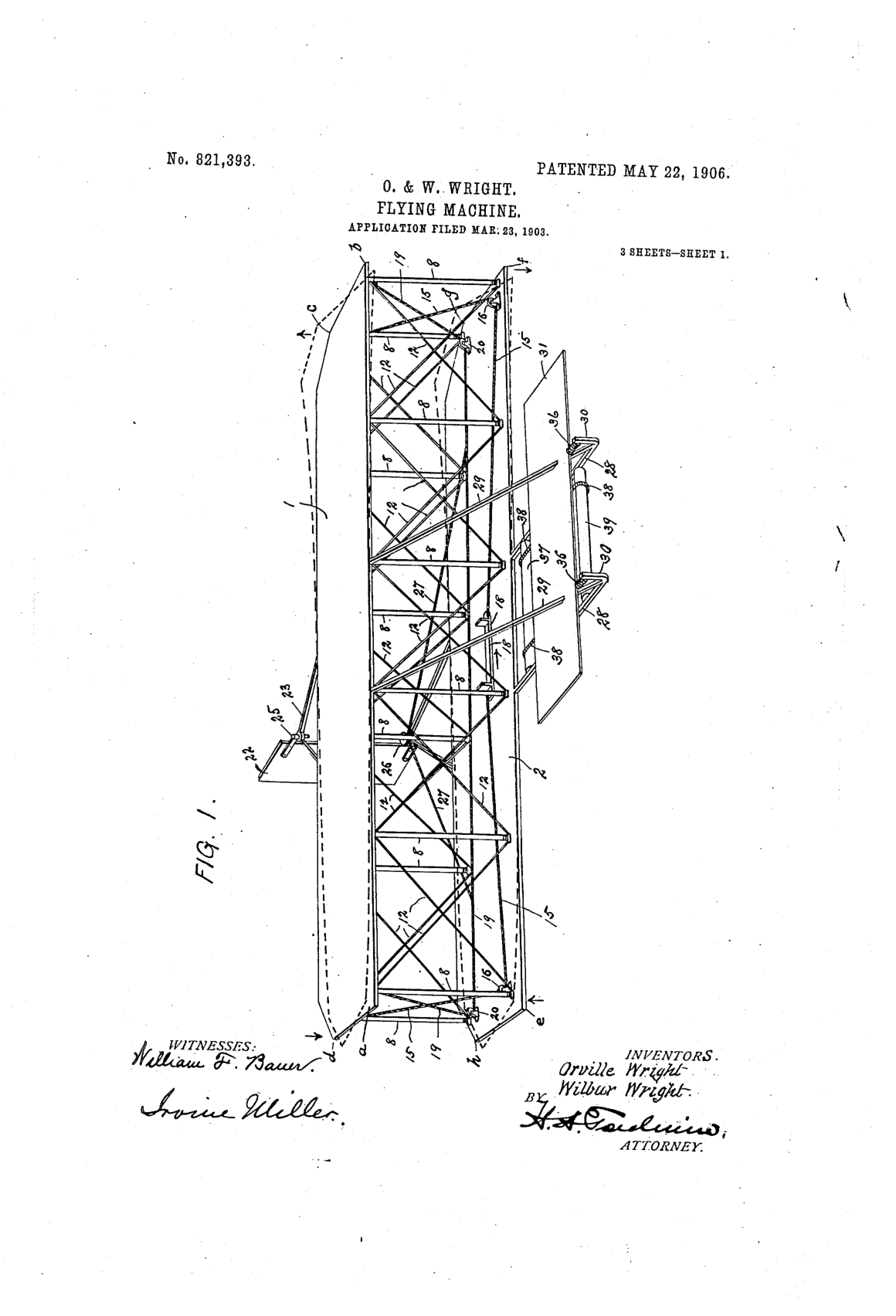
The Wrights treated control as the central problem, developing three-axis control — wing-warping for roll, combined with a movable rudder and forward elevator — refined through systematic glider tests and data from their own wind tunnel.
Why it mattered
On December 17, 1903 their machine made the first sustained, controlled, powered flights, showing that heavier-than-air flight was a solvable engineering problem rather than a matter of luck.
Lasting impact
Three-axis control remains the basis of every fixed-wing aircraft, and the Wrights' methodical, data-driven approach became a template for aeronautical engineering.
Gallery
Did you know?
- After finding published aerodynamic tables unreliable, the Wrights built their own wind tunnel to gather lift and drag data for their wing designs.